Your analytics dashboard says that LinkedIn ad drove 15 conversions last month. You increase the budget. Three months later, revenue hasn't moved. What happened?
The problem isn't the ad. It's that first-click attribution told you a comforting lie: that people see your ad, click through, and buy. In reality, most B2B purchases involve 7-13 touchpoints before someone converts. That LinkedIn ad might have introduced your brand, but the retargeting campaign, the nurture email, and the case study they read at 11pm probably closed the deal.
First-click attribution gives 100% credit to the introduction and zero credit to everything that actually convinced them to buy. This isn't a theoretical problem. It's why you're starving the channels that drive revenue while pouring money into channels that just get people's attention.
Fixing this is simpler than you think. You don't need expensive attribution software or a data science degree. You need to stop trusting the default setting in your analytics platform.
The Seductive Simplicity of First-Click Attribution
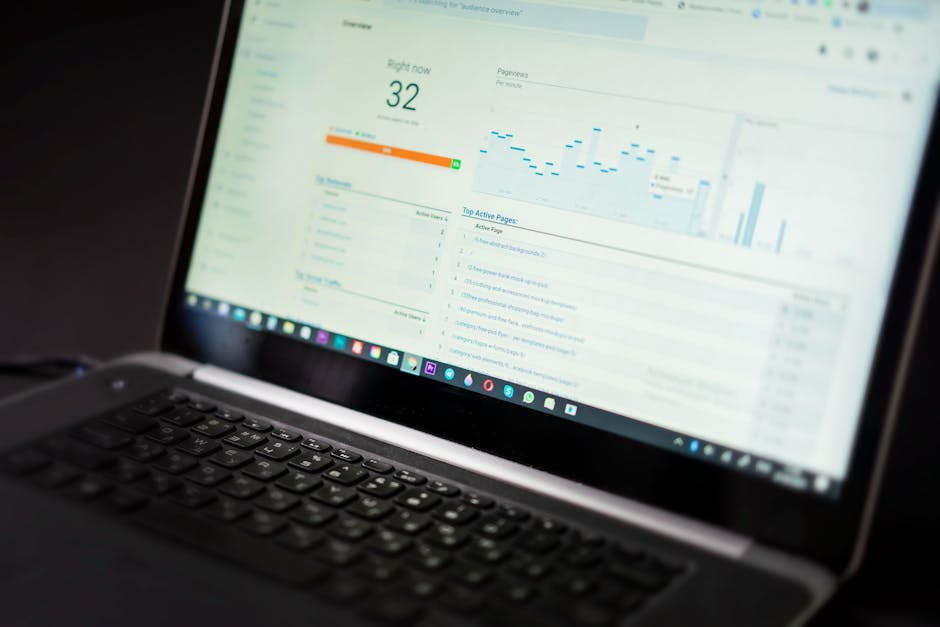
First-click attribution is the default in most analytics platforms for a reason: it's clean. One click, one source, one answer to "where did this lead come from?" It feels satisfying to point at a LinkedIn ad or a Google search and say "that's what worked."
There's nothing wrong with wanting simple answers. Marketing is complicated enough without wrestling with attribution models. First-click gives you a clear origin story. "They found us through that LinkedIn ad" is a complete narrative. It's easy to report to your boss or your client.
The appeal is real. First-click gives credit to discovery moments, which feels fair. After all, if someone never saw that initial ad, they wouldn't be in your funnel at all. It matches how we naturally tell stories about customer acquisition.
Why first-click feels intuitive to marketing teams
First-click attribution is psychologically satisfying because it mirrors how we think about relationships. We remember how we met someone. The first date. The initial spark. We don't usually credit the 47 conversations that followed for why the relationship worked.
In marketing, this translates to celebrating the channel that introduced the lead. The webinar that got them on your list. The blog post they found through Google. The LinkedIn ad they clicked. These moments feel important because they are important. Just not in the way first-click suggests.
The problem is that awareness doesn't equal intent, and intent doesn't equal readiness to buy. Someone clicking your ad in January might not be ready to purchase until April. But first-click will credit January's ad for April's sale, even if what actually closed the deal was a retargeting campaign in March.
The hidden assumption that breaks everything
First-click attribution assumes that awareness equals conversion readiness. It doesn't. Most people who click your ad aren't ready to buy. They're researching. Comparing options. Building a business case. Waiting for budget approval.
This assumption leads to dangerous decisions. You see that retargeting never gets first-click credit, so you cut the budget. Meanwhile, retargeting is actually closing deals by bringing back people who visited months ago and are now ready to buy. You just can't see it because your attribution model is blind to everything except the first touch.
I've seen marketing teams gut their conversion channels because first-click told them those channels weren't working. The reality? Those channels were doing the hard work of turning awareness into revenue. They just weren't getting credit for it.
What First-Click Actually Measures (And What It Ignores)
First-click legitimately tracks initial awareness touchpoints. It tells you which channels are introducing new people to your brand. That's useful information. If you're launching a new product or entering a new market, knowing which channels drive discovery matters.
But here's what it misses: nurture emails, retargeting ads, direct visits, sales calls, comparison research, case studies, pricing page visits, demo requests, and every other interaction that actually influences the buying decision.
You're seeing about 10% of the picture. Not completely useless, but dangerously incomplete. It's like judging a film based only on the opening scene.
The 'awareness touch' vs. the 'conversion touch' problem
Awareness touches introduce your brand. Conversion touches close the deal. First-click gives 100% credit to awareness and 0% to everything that drove the actual decision.
Think about it like crediting only the first date for a marriage. Sure, you had to meet somehow. But the relationship that followed, the conversations, the shared experiences, the decision to commit - none of that gets acknowledged if you only count the first interaction.
In B2B marketing, the gap between awareness and conversion can be months. During that time, dozens of touchpoints are building trust, addressing objections, and moving the prospect toward a decision. First-click ignores all of it.
Real customer journey: A three-month B2B software purchase
Here's what a typical B2B software purchase actually looks like:
Week 1: Sarah sees your LinkedIn ad, clicks through, reads one blog post, leaves.
Week 3: Retargeting ad brings her back. She downloads a guide.
Week 5: Nurture email sequence starts. She opens three emails, clicks one link.
Week 7: She visits your pricing page directly (bookmark or Google search).
Week 9: She reads a case study about a company similar to hers.
Week 10: She requests a demo.
Week 11: Sales call happens. She asks for a proposal.
Week 12: She signs up.
First-click attribution reports: "LinkedIn ad drove this conversion." It gives the ad 100% credit.
What actually influenced Sarah's decision? The retargeting ad that brought her back when she was ready to look deeper. The nurture emails that kept you top of mind. The case study that proved you could solve her specific problem. The sales call that addressed her final objections.
The LinkedIn ad mattered. But it didn't close the deal. If you're optimising based on first-click data, you're optimising for awareness while starving the channels that drive revenue.
Three Tracking Approaches That Actually Reflect Reality
You don't need perfect attribution. You need attribution that's better than first-click. These three approaches work with tools you probably already use - Google Analytics, HubSpot, Salesforce - without requiring expensive attribution software.
Pick one to start. Don't try to implement all three immediately. The goal is to see more of the customer journey, not to create a new analytics project that never gets finished.
Position-based attribution (40-20-40 split)
Position-based attribution gives 40% credit to the first touch, 40% to the last touch, and splits the remaining 20% among all the touchpoints in between.
This works because it acknowledges both discovery and conversion moments without ignoring the journey between them. The first touch matters - it got them into your funnel. The last touch matters - it closed the deal. And the middle touches matter too, even if they get less credit individually.
In Google Analytics 4, you can set this up in under five minutes. Go to Admin → Data display → Attribution settings → Change attribution model → Position-based. Done.
If you're using Lead Recorder, position-based attribution is built in, giving you immediate visibility into which touchpoints actually contribute to conversions without the complexity of enterprise analytics platforms.
Time-decay weighting without the complexity
Time-decay attribution gives more credit to touchpoints closer to the conversion and less credit to older ones. A touchpoint from 60 days ago might get 10% credit. A touchpoint from 7 days ago gets 40%.
This makes sense for longer B2B sales cycles. The webinar someone attended three months ago mattered, but the pricing page they visited last week probably mattered more for closing the deal.
Use decay windows that match your typical sales cycle. If most deals close within 30 days, use a 30-day decay window. If your sales cycle is 90 days, extend it accordingly.
Time-decay is particularly useful when you're trying to understand which late-stage touchpoints are actually driving conversions. It helps you see what's working in the final stretch without completely ignoring the earlier relationship-building.
Campaign-level influence tracking in your CRM
If you're running fewer than 50 deals per month, manual campaign influence tracking can be more insightful than any automated attribution model.
Tag every campaign interaction in your CRM contact record. When someone clicks an email, note it. When they attend a webinar, note it. When they download a resource, note it. Then, when a deal closes, review which campaigns touched that contact during their journey.
This requires discipline, but it delivers clear insights. You'll see patterns. "Every deal that closed this quarter interacted with our case study library." "Retargeting brought back 60% of our closed deals at some point in their journey."
This isn't scalable for high-volume businesses, but for smaller teams, it's often more accurate than trusting an algorithm that doesn't understand your specific sales process.
Start With One Change This Week
The easiest change you can make right now: switch from first-click to position-based attribution in Google Analytics 4. It takes five minutes. You don't need approval. You don't need a budget. You just need to change the setting.
Run both models in parallel for 30 days. Compare the insights. You'll see which channels are getting credit under first-click that probably don't deserve it, and which channels are being ignored despite driving actual conversions.
Imperfect multi-touch attribution beats perfectly wrong first-click attribution. You don't need a flawless model. You need a model that shows you more than 10% of the customer journey.
If you need help implementing smarter attribution without the complexity of enterprise tools, Lead Recorder specialises in giving businesses exactly what they need to know about their leads - no more, no less. Get in touch for a consultation.