
Your team schedules two-day buffers for approvals. They check three different systems to find client pricing. They've learned to send briefs early because "refinement always takes a few rounds." Nobody complains about these delays anymore. They've become part of the plan.
That's the problem.
The bottlenecks doing the most damage aren't the ones your team flags in meetings. They're the slowdowns you've all adapted to so completely that you no longer see them as problems. This article shows you how to spot what you've normalised and how simple tracking exposes the delays hiding in plain sight.
The Slowdowns You've Already Adapted To
The worst bottlenecks aren't dramatic. They don't cause fires or missed deadlines. They're the quiet delays that teams absorb into their workflow until they become invisible.
Waiting two days for sign-off. Checking Slack, then the shared drive, then email to find one piece of information. Redoing work because the brief was incomplete. Your team doesn't see these as breakdowns. They see them as normal operating conditions.
This isn't about laziness or poor planning. It's about psychological adaptation. When you encounter the same delay repeatedly, your brain stops registering it as a problem and starts treating it as a constraint to work around. You build the delay into your timeline. You stop questioning why it exists.
Why your team stops noticing them
Repeated exposure to a delay changes how teams plan. Instead of asking why approval takes three days, they schedule around it. Instead of fixing the information retrieval problem, they start earlier to account for the search time.
Research shows that 70% of executives spend significant time on repetitive tasks without questioning whether those tasks should exist at all. The pattern becomes the process.
Here's a real example: a marketing team schedules "buffer days" for creative approval. When you ask why approval takes so long, they shrug. That's just how long it takes. Nobody's measured it. Nobody's asked whether the approver actually needs two days or whether the work is sitting unnoticed in their inbox for 47 hours before they look at it.
The delay isn't the problem anymore. It's just Tuesday.
The cost of 'that's just how we do it'
Normalised bottlenecks don't stay contained. They compound.
One approval delay adds two days to a project. But that delay pushes the next handoff, which delays the following task, which means the client deliverable is late. The team works overtime to catch up. The client experience suffers. The employee who stayed late three nights in a row starts looking at job ads.
Inefficiency doesn't just waste time. It increases operational costs through duplicated effort and manual workarounds. It drives employee burnout when people spend their days fighting the process instead of doing the work. And it creates poor customer experiences when delays stack up and push deadlines.
The phrase "that's just how we do it" is expensive. It signals that the team has stopped looking for the actual problem and started managing symptoms instead.
Three Invisible Bottlenecks Simple Tracking Exposes
Measurement makes the invisible visible. When you start tracking how long tasks spend in each stage, patterns surface immediately. These three bottlenecks show up in almost every workflow, but they only become obvious when you measure cycle time.
Handoff delays disguised as 'waiting for approval'
Tasks sit in "pending approval" for days. Your team assumes the approver is busy or being thorough. But when you track it, you discover something else: the approver didn't know the task was waiting.
This happens constantly. Design sends work to marketing for sign-off. Marketing thinks design is still working on it. Three days pass. Nobody follows up because everyone assumes someone else is handling it.
The real issue isn't approval taking too long. It's unclear ownership and poor handoff visibility. The approval step masks the actual problem: nobody knows who's supposed to do what next.
Tracking reveals the gap. A task marked "sent for review" on Monday doesn't get opened until Thursday, not because review takes four days, but because the reviewer didn't know it had arrived.
Rework loops that never get labelled as rework
Your team doesn't call it rework. They call it refinement. A quick update. Minor changes. But when you track task flow, you see the same item returning to the same person three times before it's actually done.
This happens when feedback comes too late or when the original brief was incomplete. The writer finishes the content, sends it for review, and gets it back with questions that should have been answered before they started. They revise. It goes back. More questions. Another revision.
Manual workarounds and disconnected systems create these hidden rework cycles. Information that should have been available at the start only surfaces halfway through execution, forcing the team to backtrack.
Tracking exposes the loop. What looks like one task is actually three attempts, each eating time and focus that could have gone to new work.
Information retrieval that eats 20% of cycle time
How much time does your team spend hunting for information? Client specs. Pricing details. The decision made in last week's meeting. The template someone used last month.
When you track it, the number is shocking. Teams regularly spend 90 minutes a day searching across Slack threads, shared drives, email, and someone's memory. That's 20% of an eight-hour day spent retrieving information that should be immediately accessible.
Legacy systems and manual processes slow down workflows because the information exists in six places, none of them current. Or it exists in one place, but nobody knows where.
Tracking cycle time reveals how much of your process is actually just searching. The work itself might take two hours. Finding the information to do the work takes another 90 minutes.
What Actually Fixes Them (Not Process Maps)
You don't fix these bottlenecks with documentation. You fix them by changing the structure so the delay can't happen.
Process maps show you where the problem is. They don't remove it. You need interventions that eliminate the friction, not workshops that diagram it.
Making handoffs self-service instead of approval-gated
Stop making people wait for explicit approval. Redesign the handoff so the next person can pull work when they're ready.
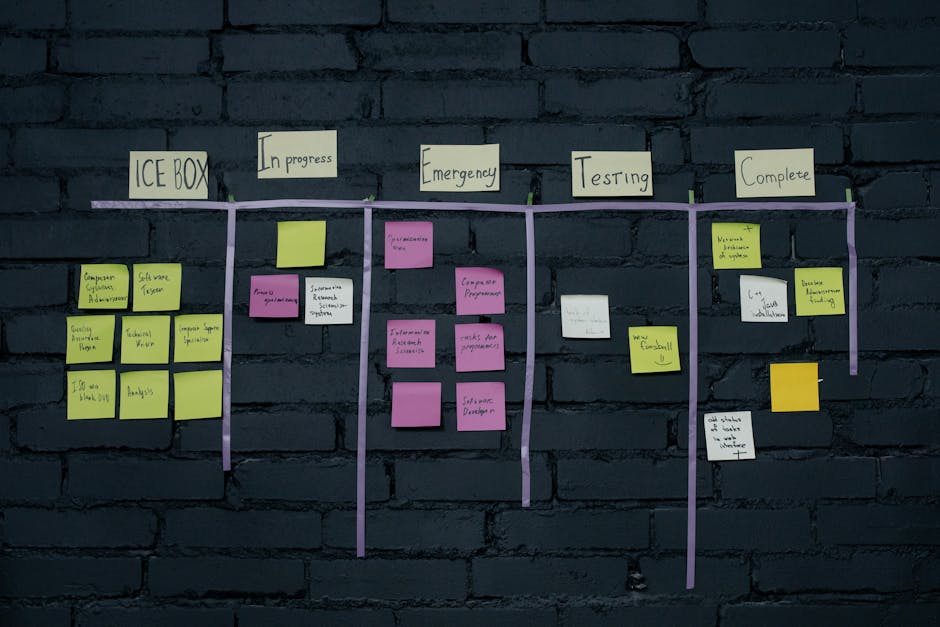
Replace "send for review" with a shared board where completed items sit in a "ready for review" column. Reviewers check the board and pick up what's waiting. No email. No notification. No delay while the item sits in someone's inbox.
This works because it removes the dependency. The person doing the work doesn't need to chase approval. The reviewer doesn't need to be notified. The work moves when capacity exists, not when someone remembers to follow up.
Automation reduces manual approval steps and improves workflow speed by removing the handoff as a blocking event. If you need help implementing self-service workflows that eliminate approval delays, Lead Recorder specialises in tracking systems that surface exactly where these handoff gaps occur.
Building feedback into the step that creates errors
Rework happens because feedback comes too late. You catch missing information during execution when it should have been flagged at the brief stage.
Add validation at the point of creation. If briefs always come back incomplete, build a checklist that won't let the brief move forward until every required field is filled. If designs always need revision because brand guidelines weren't followed, embed the guidelines into the design template.
This isn't about adding bureaucracy. It's about preventing the error before it creates downstream rework. A two-minute checklist at the start eliminates three rounds of revision later.
Automation reduces human error and improves productivity by catching problems before they propagate through the workflow.
Centralising the five things people search for daily
You don't need a complex knowledge base. You need a single source for the five things your team looks up constantly: client details, pricing, templates, decisions, and status updates.
Put them in one place. Make that place obvious. Keep it current.
This eliminates the 20% of cycle time lost to information retrieval. Instead of checking three systems and asking two people, your team opens one document and finds the answer in 30 seconds.
The fix isn't sophisticated. It's just centralised and maintained. A shared spreadsheet works if everyone knows where it is and someone keeps it updated.
The One Metric That Surfaces Every Hidden Bottleneck
Cycle time is the metric that exposes everything.
Track how long each task spends in each stage. Not how long the work takes. How long the task exists from start to finish, including all the waiting, searching, and rework your team has normalised.
When you measure time-in-stage, invisible bottlenecks become immediately obvious. Tasks that should take two hours show a four-day cycle time. You see exactly where the delay happens. Waiting for approval. Sitting in someone's queue. Being reworked because information was missing.
This is the metric that reveals what your team has adapted to and stopped questioning. It shows you the delays you've built into your planning and the inefficiencies you've accepted as normal.
Start tracking cycle time for one process this week. Pick something small. Measure how long tasks actually take from start to finish. You'll see patterns you didn't know existed.
If you want expert help identifying where your cycle time is leaking and building tracking systems that surface hidden bottlenecks, Lead Recorder can show you exactly what's slowing you down and how to fix it.